“Nothing can stop the power of a committed and determined people to make a difference in our society.” — John Lewis
Racism in America is a virus that eats at our moral foundation and breaks down our institutions from the inside out — including our political system.
Nearly two years into this new administration, Black Americans have been targeted by an executive order that stripped hundreds of thousands of hard-working public servants of their jobs and created hostile work environments for all of us. We’ve been denied promotions in the military, had our positions of power threatened by the president himself, and had the voting rights many of us died for in the 1960s gutted by federal courts packed with loyalists.
But like any other virus that tries to overtake us, we build our defenses and fight back.
At the top of this year, in a continuation of their efforts to suppress voters, right-wing extremists in North Carolina voted to deny North Carolina A&T (NCAT) students access to an on-campus polling station where they could cast their votes in the midterm election.
Despite allowing one in the 2024 presidential election, the election board decided to keep playing with the voting rights of an entire population of HBCU students, even as their peers at UNC-Chapel Hill had access to a polling station just a two-minute walk away.
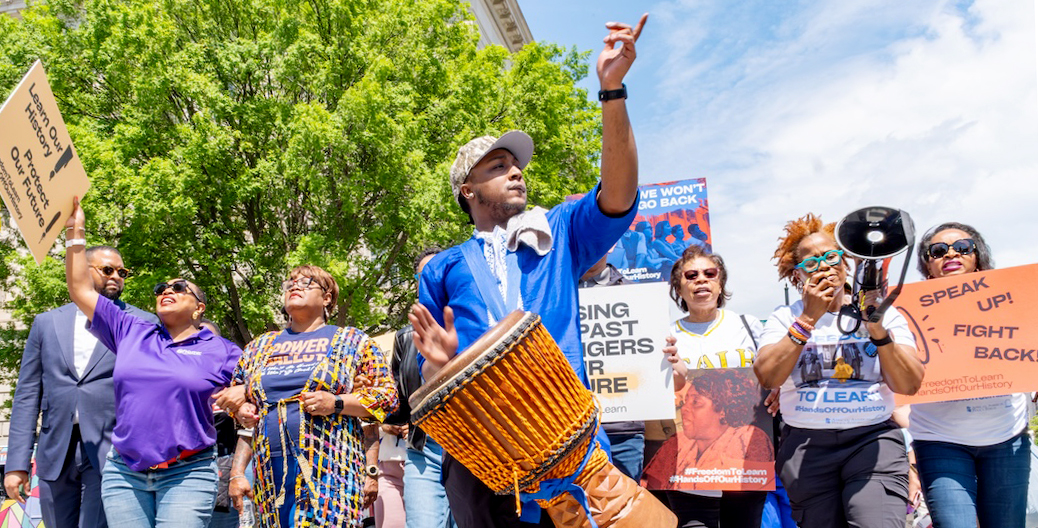
In the spirit of the Student Nonviolent Coordinating Committee (SNCC), which was founded at Shaw University in North Carolina in 1960, students took to the streets this week in a visible show of resistance, marching to the polls to vote. Seeing thousands of students walk 45 minutes each way in the heat to make their voices heard reminds us what’s possible when our youth work together.
This was more than an act of defiance against the labels the media has given Gen Z and Gen Alpha, calling them lazy, entitled and academically left behind. It highlighted for the world what this generation is capable of.
The fight to keep us from the ballot box in the 1950s and 1960s was largely institutional and physical. Poll taxes and literacy tests were designed to create barriers by sowing confusion and anxiety. And for those who managed to travel to polling locations across the South, they faced extreme violence from authorities and the Ku Klux Klan.
Today’s young people navigate a new system designed to sow confusion — social media algorithms.
The same weekend NCAT students marched to the polls, millions of Americans took to the streets in protest of the antidemocratic policies coming from the White House in the No Kings rally — one of which I spoke at in Atlanta.
The day of the rally, organizers found that social media accounts linked to the movement were shadowbanned and suppressed as disinformation about candidates, voter registration and voting deadlines continued to proliferate across the same platforms.
These are the same platforms our youth use to communicate with one another and stay connected to the world around them.
Disinformation is being amplified by intentional decisions to gerrymander election maps, including one in North Carolina that splits the campus of North Carolina A&T down the middle, an intentional move to dilute the student body’s collective political power.
But the resistance continues to grow. As I write this column, hundreds of students are marching again, this time with When We All Vote co-chair and actress Marsai Martin, in an increasing show of support from our organizations and pop culture icons.
No election is worth sitting out. It’s something that my generation, which lived through segregation and Jim Crow, understands deeply. One of our greatest fears has been the idea that our children would become complacent in the fight for equality and accept the status quo as the virus of institutional racism continued to prey on our weaknesses.
I’m proud to see this generation becoming not only a defensive line against these tactics but also a sharpened, savvy weapon in the fight for our liberation, advancement and prosperity in this country.
I commend every student taking this fight seriously and stand in solidarity with the next generation of changemakers.
Morial is president/CEO of the National Urban League.