
After two decades of renovations, the Carter G. Woodson Home in Northwest D.C. will reopen to the public on Nov. 7, offering a glimpse into the celebrated historian’s life, highlighting his barrier-breaking contributions and emphasizing the importance of his work and legacy for people today and the future.
Located in D.C.’s Shaw neighborhood, the national historic site, museum and visitors center was the place where, in 1926, Woodson createdNegro History Week, now celebrated as Black History Month. A century later, and as the nation faces federal attacks to Black history, the home’s reopening works to further Woodson’s work to preserve, uplift and share African American narratives. .
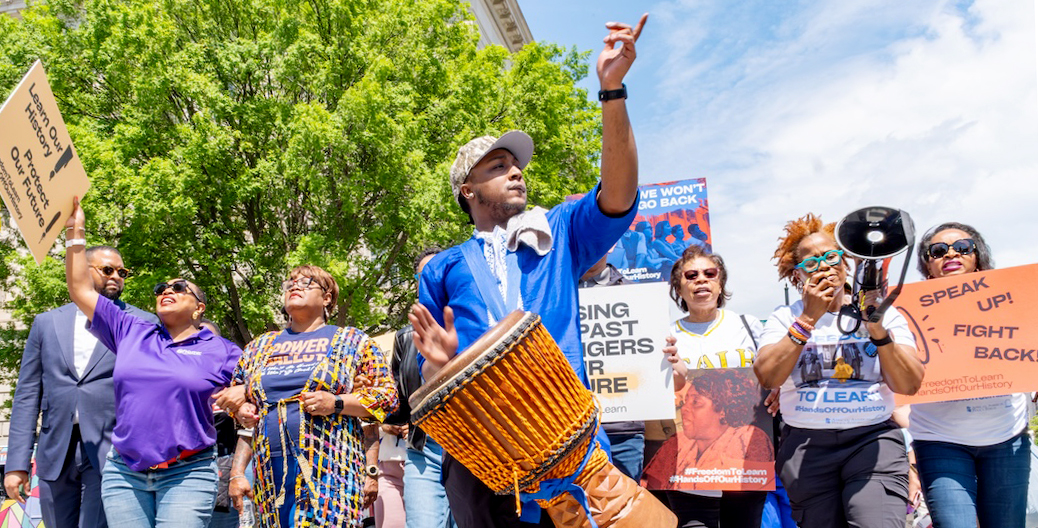
“I could not think of a more important site that needs to be open at this moment in history,” said Dr. Karsonya “Kaye” Wise Whitehead, the president of the Association for the Study of African American Life and History (ASALH), an organization founded by Woodson in 1915. “Black history is under attack. What do we do? We stand up and we fight.”
Woodson purchased the home in 1922 for $8,000 and for 28 years, 1538 9th Street NW served not only as his personal residence, but as the headquarters for ASALH and his publishing company, The Associated Publishers, Incorporated.

“One of the things we talk about here at the Woodson home is to really emphasize this is where he institutionalized the study of Black life, Black history and culture,” John Fowler, the supervisory ranger for the site, said. “He wrote the books, he taught the teachers, he did the research, he preserved the rare objects, manuscripts. All of that happened here, in this home.”
Following Woodson’s death at his home in 1950, the property continued to serve as headquarters for both ASALH and Associated Publishers until 1971.
In 1976, the home was named a National Historic Landmark and in 2003, it was declared a National Historic Site by Congress. In 2005, the National Park Service purchased the home from ASALH.
Renovations began on the home, as well as the two adjoining properties, in 2006, after Congress declared it a national park site. Twenty years and about $14.2 million were invested in renovating the three properties, preserving original aspects of Dr. Woodson’s home, including the hardwood floors, his desk and his library.
“I’ve been with the Park Service for 16 years and that entire time we [were told],‘We got the Woodson home. It’s coming,’” Fowler said. “To see it at this point is wonderful. I’m just excited that more people will get to learn about Dr. Woodson, that more people will get to learn about ASALH, an organization that is still active, still existing, helping us do this work.”
‘The Walls Are Talking‘
Visitors will be able to view various parts of the home, taking a dive into several aspects of Woodson’s life.
Guests are able to see Woodson’s multiple offices, including where his publishing staff would prepare his books for mailing, and his bedroom, where he died in 1950. The site also has museum exhibits, engaging viewers of all ages to consider Woodson’s commitment to the scholarship of Black history.
When Woodson founded ASALH in 1915, he legitimized Black American history as a field of scholarship and study.
“What Carter G. Woodson demonstrated for us is that Black history is American history,” Wise Whitehead The Informer. “In fact, we expand that to be world history, because if people can understand Black history, they can truly understand the history of America and why America is where it is now.”
The ASALH president said the reopening of Woodson’s home, not only comes at a critical moment for the nation, but also offers a call to action for visitors.
“As we look at the work of Dr. Woodson, in this moment,” she continued, “[it is special] to have the house open, to have it as a place of research, discovery, a place to come and reflect, and a place to think about what we all have to do to pick up the mantles and carry it forward.”
The Nov. 7 grand reopening will include guided house and walking tours through the Shaw neighborhood, hands-on children’s programs and music. All the Saturday programming is free, and tour tickets will be available for pickup on a first come first served basis at Shiloh Baptist Church from 9 a.m. to 4 p.m.
Fowler stressed the importance of continuing the work of Woodson and his contemporaries, urging community members to visit the home and engage with its history through the work of the National Park Service.
“Unfortunately we’re living in times where this work can be difficult to do, but with this help and support of ASALH and other partners, we can make this happen,” he said. “Just go out and bring the people in.”
Wise Whitehead emphasized the home will serve as a place of reflection and discovery.
“The walls are talking,” she told The Informer. “If you stand in a place where genius has been created, you can stand in a place where a fight really originated. If you stand in a place where people picked up the mantle, then perhaps a little bit of that you can take with you.”