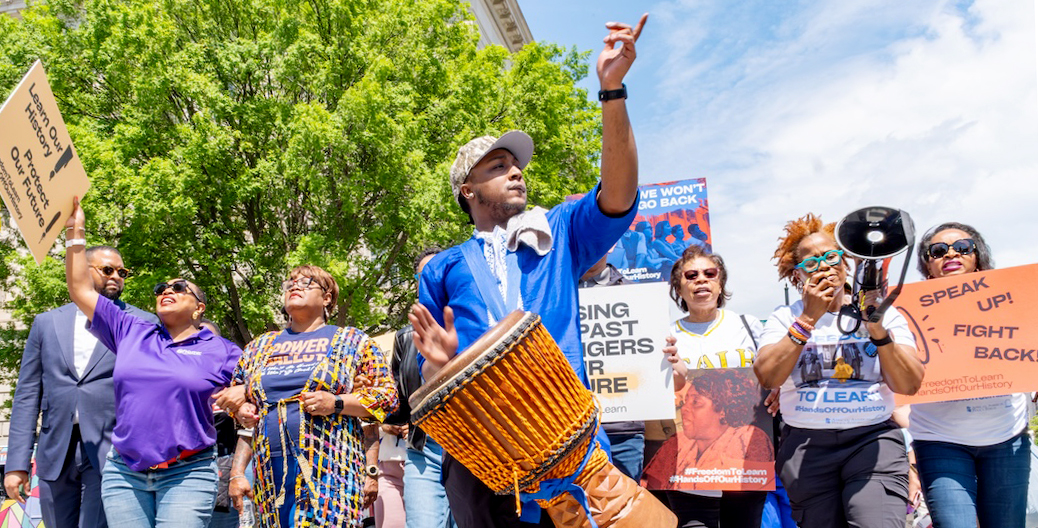
Democrats’ successful take over of Congress in the Nov. 3 election has given Washington, D.C., another chance to end more than two centuries of political disenfranchisement.
Newly elected lawmakers are pledging support for statehood, District Delegate-elect Robert White is preparing to represent the District on Capitol Hill and advocates are demanding that the party turn its election victories into legislation granting the nation’s capital’s nearly 700,000 residents full voting rights.
“The midterm elections have created an opportunity to turn renewed energy into meaningful progress,” said Amy Vruno, executive director of DC Vote. “With Democrats taking control of both the House and Senate, we have a chance to make D.C. statehood a priority and advance the full democratic rights that D.C. residents have been denied for more than 200 years.”
For Washington residents, the consequences of congressional authority have been anything but theoretical. During President Donald Trump’s return to the White House, Congress froze the District’s spending at 2024 levels, temporarily preventing local officials from using approximately $1 billion of their own taxpayers’ money.

The restriction forced a government responsible for public schools, police, emergency services and neighborhood programs to contend with financial decisions made by lawmakers who answer to voters elsewhere.
The ACLU of the District of Columbia has invoked the nation’s founding struggle against taxation without representation in demanding an end to the arrangement.
“Can’t believe we’re still saying this 250 years later: It’s time to end taxation without representation,” the organization wrote in an Oct. 22 social media post. “It’s time to make D.C. the 51st state.”
Washington’s residents elect a mayor and council, pay federal income taxes and serve in the armed forces. They have no senators, and their delegate to the House cannot vote on final legislation. Congress can also overturn local laws, leaving decisions about the District’s criminal justice system, budget and other municipal affairs subject to federal intervention.
White, a longtime D.C. Council member who won Tuesday’s election to succeed retiring Del. Eleanor Holmes Norton, will enter Congress with statehood among his priorities. His election places a new advocate in the District’s congressional office, although the constitutional and legislative restrictions on that office remain unchanged.
White, who stepped down as an at-large council member the day before the Nov. 3 election to comply with a 1970 rule, argued that granting the District representation would also affect Congress’s ability to pass legislation on health care, reproductive rights and other issues.
“The agenda gets done if you have the votes — and D.C. statehood gives you more votes,” White said.
The incoming Senate will include several lawmakers identified by DC Vote as supporters. Vruno said South Carolina Senator-elect Dr. Annie Andrews and Maine Senator-elect Troy Jackson have pledged their backing, while Ohio Senator-elect Sherrod Brown supported statehood during his previous Senate service.
“Last night’s results mean that the next [two to three] years are likely to be the best chance in a generation for D.C. to make the case to America that we are ready for statehood,” Policy expert Tom Lee wrote on X.
Working to Get More Lawmakers on Board with D.C. Statehood
Democrats’ victory does not guarantee statehood.
The House passed legislation admitting Washington as the 51st state in 2020 and 2021, but neither measure cleared the Senate.
DC Vote said 44 senators co-sponsored statehood legislation in the 119th Congress, leaving supporters short of the 60 votes generally needed to overcome a filibuster. President Trump could also veto a bill, requiring two-thirds majorities in both chambers to override him.
Republican opponents have challenged the constitutionality of admitting the District as a state through ordinary legislation and have proposed alternatives, including returning residential portions of Washington to Maryland. Statehood legislation would preserve a smaller federal district containing the principal government buildings while granting statehood to the surrounding residential neighborhoods.
White faces resistance within his own party as well. Some congressional Democrats have joined Republicans in voting to overturn District laws, and the incoming majority has competing priorities involving health care, household expenses and oversight of the Trump administration.
“We have seen D.C. used as a bargaining chip by the party,” White said in a published interview. “The Democratic Party has not consistently been a firewall for D.C.”
District Mayor-elect Janeese Lewis George has already spoken with federal lawmakers, including House Democratic leader Hakeem Jeffries, about protecting the District’s authority. Her administration will take office as Congress changes hands, giving the city’s leadership a different relationship with the committees that oversee local government.
The House Oversight Committee, which has been central to Republican efforts to intervene in District affairs, is expected to pass from James Comer (R-Ky.) to Democrat Robert Garcia (D-Calif.). That change could provide immediate relief from congressional attempts to overturn local policies, although it would not eliminate Congress’s constitutional authority over Washington.
Former Vice President Kamala Harris has also called for D.C. statehood as part of proposed changes to American political institutions, including expanding the Supreme Court and reconsidering the Electoral College.
Vruno said DC Vote is concentrating on securing commitments from lawmakers who previously supported statehood, winning over undecided members and organizing supporters in states whose congressional delegations will determine whether the legislation advances.
“DC statehood is about more than representation for the nearly 700,000 residents who live here,” Vruno said. “It is about the fundamental promise of our democracy: that every American deserves a voice in the laws that govern them.”