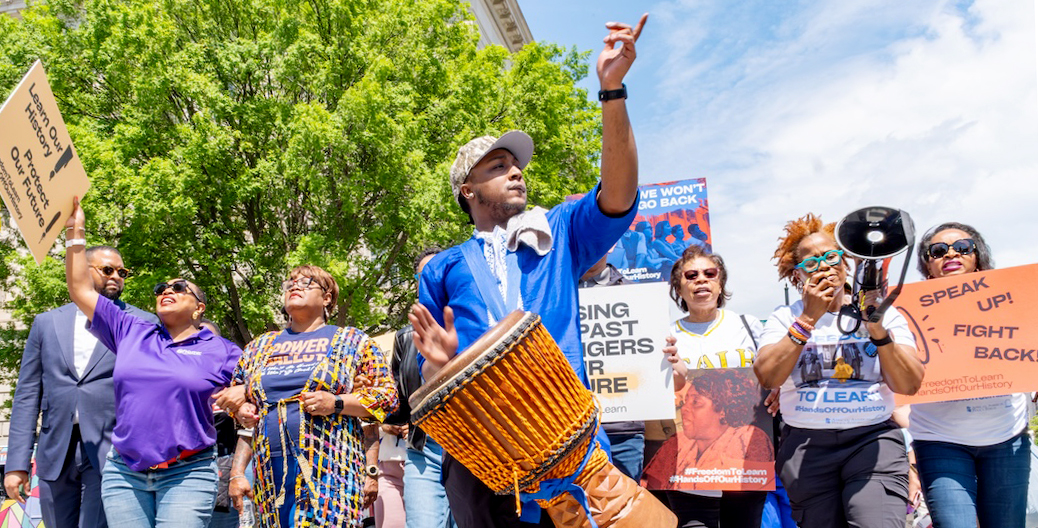
Dolores Huerta confronted wealthy growers, defied police, endured arrests, and forced an American agricultural industry built on cheap labor to reckon with the people who harvest its crops. Armed with picket signs, boycotts, and an extraordinary talent for organizing, she helped transform impoverished farm workers into a political force that could no longer be ignored.
Huerta, the pioneering labor organizer and civil rights leader who co-founded what became the United Farm Workers with Cesar Chavez, died Wednesday at her Bakersfield, California, home. She was 96. Her family said the cause was cancer.
“Dolores Huerta was a giant,” said Neidi Dominguez, executive director of Organized Power In Numbers. “We take up the baton she passed for the generations that come after us.”
For more than seven decades, Huerta fought battles spanning California’s vineyards, union negotiation rooms, state legislatures, and the Black freedom struggle.
During the 1960s and 1970s, she organized strikes and nationwide grape boycotts that pressured growers to sign union contracts. Workers enduring punishing hours, miserable wages, and dangerous conditions gained bargaining power through collective action.
Her commitment to racial justice connected her with Coretta Scott King, with whom she worked to establish the federal holiday honoring the Rev. Dr. Martin Luther King King Jr. Huerta traveled with King’s widow to build support for the campaign and championed solidarity among African American, Latino, and other working-class families. What is a worm on it but I found more weight Anani call my computer is doing something
She understood the Black civil rights movement and the farmworkers’ struggle as parallel battles against discrimination and economic exploitation. Her organizing challenged racial divisions that employers exploited to weaken workers.
Huerta negotiated contracts, mobilized families, and challenged the men who dominated organized labor. She served as the United Farm Workers’ vice president for nearly four decades, working alongside Chavez until his death in 1993.
“She was often the only woman at bargaining tables she helped build, fighting for better working conditions while facing prejudice and sexism by bosses and allies alike,” Dominguez said.
Her declaration, “Sí, se puede,” became one of America’s most recognizable organizing slogans, eventually reaching political campaigns far removed from the fields where it originated.
Arrested more than 20 times, Huerta refused to retreat from confrontations with powerful economic interests.
Her activism continued well beyond the farmworker movement. In 2017, she joined a California campaign against predatory lenders who charged triple-digit interest rates on loans that devastated families, particularly African Americans, Latinos, and veterans. The coalition secured legislation in 2019 that restricted interest rates on certain consumer loans.
In 2026, at age 96, she joined another campaign targeting payday lenders whose loans could carry annual percentage rates exceeding 300%.
“When we took on the predatory lenders, she stood with us. She didn’t come as a figurehead; she came as a fighter,” said Graciela Aponte-Diaz, vice president of community engagement at the Center for Responsible Lending.
Maya Rupert, campaign director of The 75 Million Campaign, said Huerta’s life offered working women a lesson as they confront renewed threats to workplace protections.
“Dolores was lucky to live long enough to see what she helped build: farmworkers with union contracts, and a generation of organizers who learned from her example,” Rupert said.
Huerta lived to see her name painted on murals, celebrated in songs, and placed on streets across America. Yet she continued organizing when others might have retired to enjoy the honors.
“I’m glad she got to see streets named for her across the country while she was alive and, now that she has passed, I will add her photo to our altar and make sure my children grow up knowing her name,” Dominguez said.